













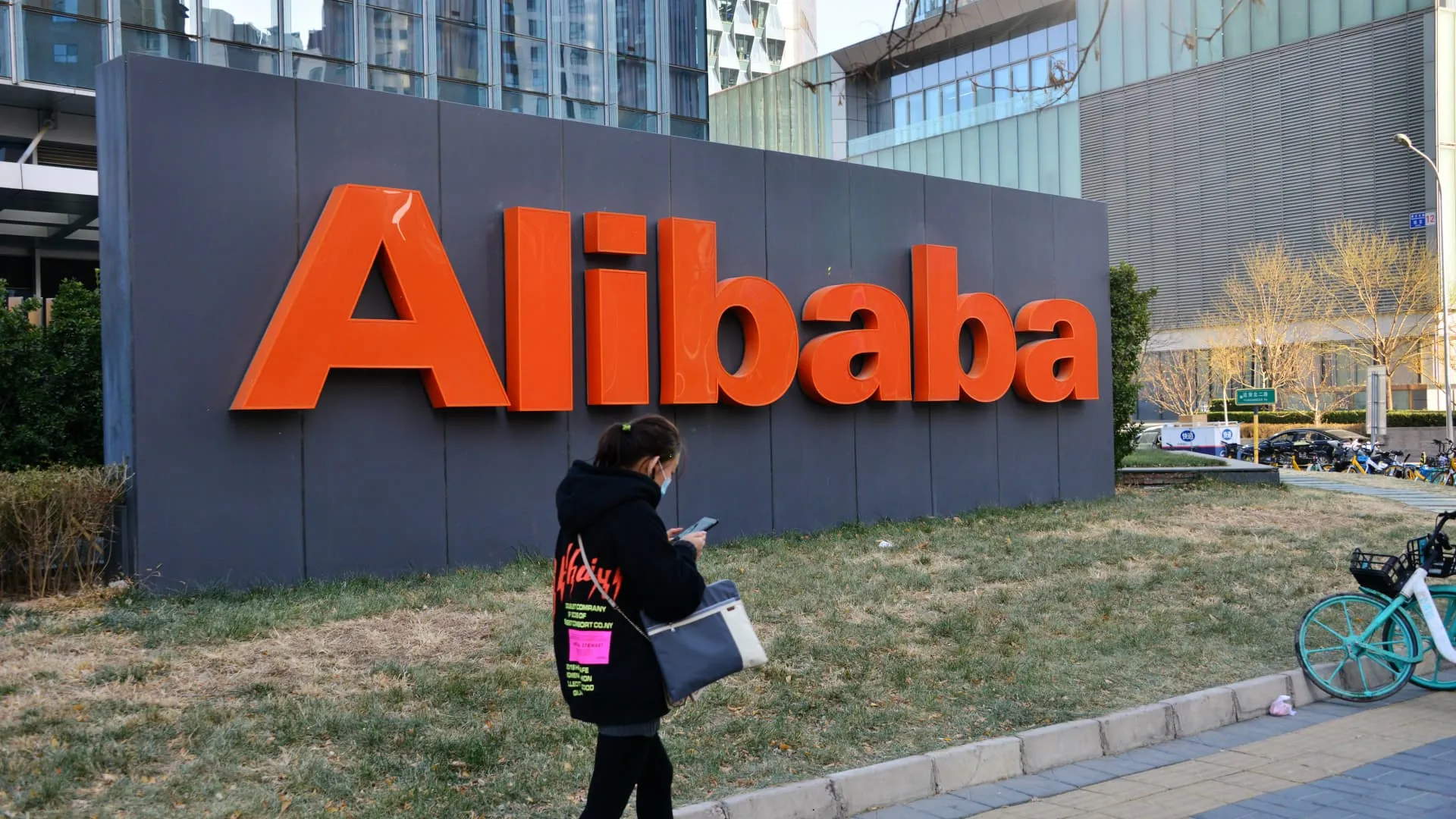
On Monday, several prominent Chinese technology companies experienced a decline in their stock prices due to concerns over insufficient government stimulus, exacerbated by Goldman Sachs’ downward revision of its growth forecasts for the country’s economy. Shares of video-sharing platform Bilibili Inc. and e-commerce giant Alibaba Group Holding fell by 5.2% and 2% respectively in Hong Kong, contributing to a 0.6% decline in the Hang Seng index. Additionally, Tencent Holdings, another major player in the tech industry, saw a 1.5% decrease in its shares.
Investor unease stemmed from worries that Chinese officials were not taking swift enough action to stimulate economic growth. The focus was on a disappointing cabinet meeting on Friday, which lacked any “concrete stimulus” according to analysts at Goldman Sachs. The analysts, led by Hui Shan, noted that the government appeared to face various economic and political constraints. They observed that relying on traditional methods such as large-scale property and infrastructure stimulus to boost short-term growth would contradict the leadership’s emphasis on “high-quality growth.”
Goldman Sachs analysts also expressed skepticism regarding the government’s options for bolstering the economy. They suggested that ongoing policy support in high-end manufacturing and new energy vehicles would unlikely drive significant growth. In light of consecutive months of weak economic data, Goldman Sachs revised its/2023 full-year real GDP growth forecast to 5.4% from 6%, and its 2024 growth forecast to 4.5% from 4.6%.
According to the Goldman analysts, the persistent challenges to growth, such as a slowdown in the property sector and a lack of confidence, are likely to outweigh the impact of increased policy easing. Although the People’s Bank of China surprised the market by cutting a short-term lending rate by 10 basis points last week, the analysts anticipated a reduction in the country’s key Reserve Requirement Ratio (RRR) instead. They now predict a 25 basis point cut in the RRR rate in the third quarter and a 10 basis point cut in the fourth quarter.
Goldman Sachs is not alone in revising China’s growth forecasts, as other Wall Street banks have also adjusted their projections downward. UBS recently lowered its/2023 growth expectations to 5.2% from 5.7%, citing weak May data and indications that June may not fare any better. JPMorgan similarly reduced its China outlook to 5.5% growth from 5.9%, attributing it to a “loss of recovery momentum in domestic activity and growing concerns of deflation.”
In the United States, investors have largely shown reluctance to invest in China this year. In fact, Bank of America highlighted that investing in Hong Kong has become a contrarian bet. Christopher Wood, global head of equity strategy at Jefferies, acknowledged the trend, noting that the aversion of global investors, beyond dedicated emerging market investors, to Chinese stocks is increasingly evident. This has contributed to a surge in foreign investment in Japanese stocks, with the Nikkei and Topix indices reaching their highest levels since March 1990 and July 1990 respectively.
Overall, concerns over the Chinese government’s response to economic stimulus, coupled with downgraded growth forecasts from Goldman Sachs and other financial institutions, have had a notable impact on the Chinese tech sector. The cautious stance of global investors towards China has further underscored the market sentiment, leading to a shift towards alternative investment opportunities such as Japanese stocks.