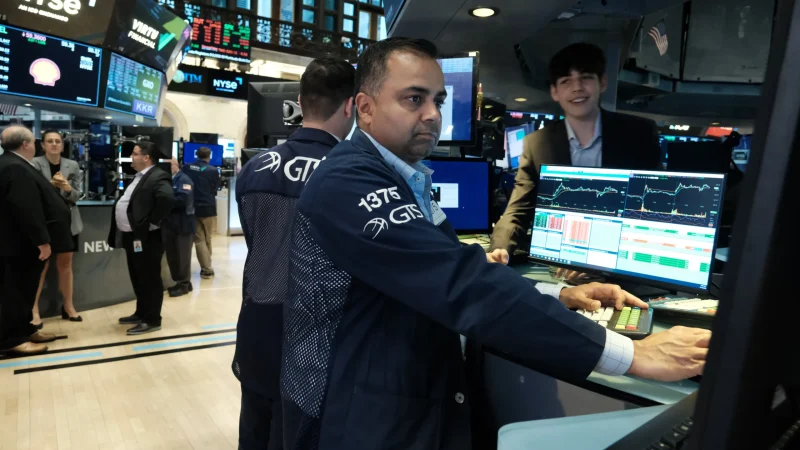










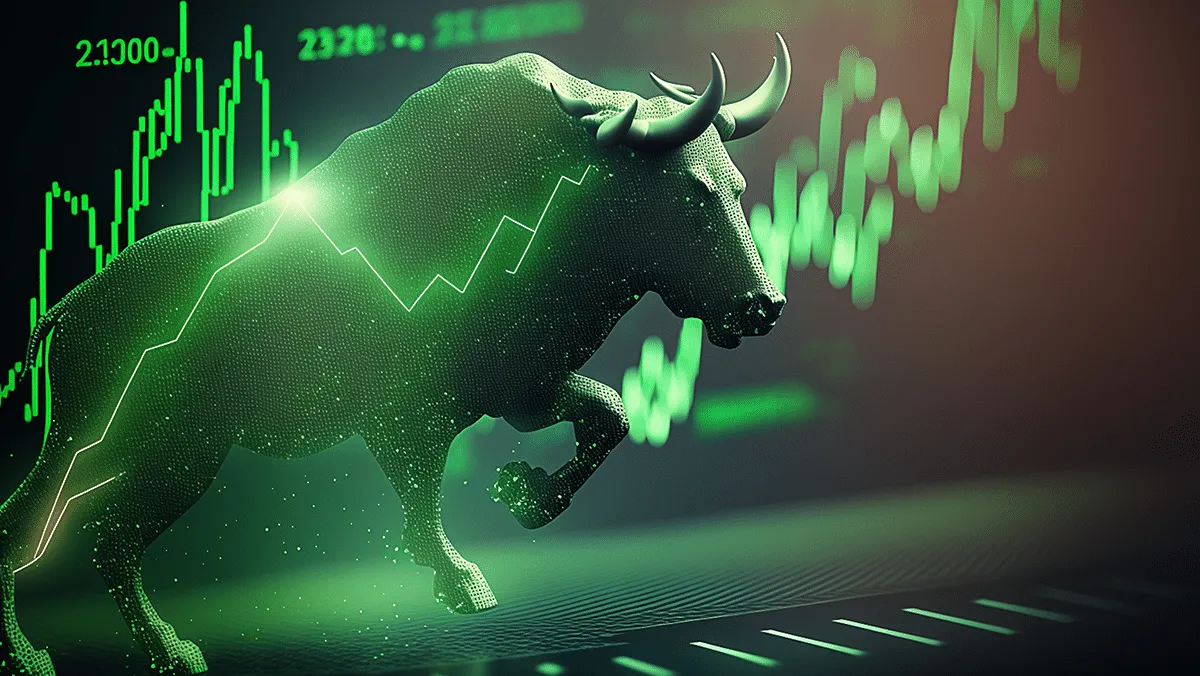
There is a growing interest among investors in capitalizing on the current bullish trend in the market. Traders are actively engaging in options trading, particularly those bets that stand to benefit from the ongoing stock rally. This surge in trading activity encompasses various sectors, including artificial intelligence stocks, smaller companies with economic sensitivity, and regional banks.
This heightened trading activity indicates a shift in the previously pessimistic outlook that many investors held at the beginning of the year. The S&P 500 has experienced a notable 13% rally, while the tech-heavy Nasdaq Composite has soared 29% in/2023, marking its strongest year-to-date performance since 1983.
Artificial intelligence-related bullish bets have experienced a significant surge in popularity. In the month of June alone, over 1.3 million call contracts on chip makers such as Nvidia, Intel, and Advanced Micro Devices have been exchanged on a daily average, setting the pace for the highest monthly total on record. This level of trading volume surpasses the exuberance witnessed in November 2021, when the Nasdaq Composite reached its peak. Trading activity has more than doubled since the beginning of the year, as reported by Cboe Global Markets data.
Call options grant the right to purchase shares at a predetermined price within a specified timeframe, while put options confer the right to sell shares. Additionally, there has been a remarkable surge in trading of S&P 500 index options, particularly in call options, according to data from Cboe Global Markets. This increased trading volume has driven up the prices of call options to extreme levels, indicating a strong sense of market optimism.
Stephen Solaka, a managing partner at Belmont Capital Group, which oversees options-based strategies, remarked that the fear of missing out has returned among investors. Traders will closely analyze forthcoming data on consumer confidence and inflation to assess the overall health of the economy and make market projections.
Nevertheless, last week witnessed a moderation in some of the recent market enthusiasm, following Federal Reserve officials reiterating their commitment to raising interest rates, along with growing concerns about commercial real estate. As a result, the S&P 500 experienced a 1.4% decline, breaking a five-week winning streak.
Nonetheless, the market rally that kicked off/2023 caught many traders off guard and resulted in losses for those who bet against the market. Several investors have expressed surprise at the better-than-expected performance of the U.S. economy and the resilience of the job market in the face of rising interest rates. Even those who previously adopted a more cautious stance now acknowledge the potential for significant gains and are keen not to miss out on them.
Zhiwei Ren, a portfolio manager at Penn Mutual Asset Management, stated that he had maintained a bearish outlook on the U.S. stock market for most of the year. However, in recent weeks, he decided to capitalize on the upward momentum of the S&P 500 by utilizing index call options, which allowed him to achieve swift profits from the stock’s ascent.
So far, the fear of missing out has created a significant divergence between the market’s winners and losers. However, there are indications that this trend is starting to change. According to Goldman Sachs Group, the current stock market rally is characterized by a narrow focus on a few tech stocks, reminiscent of the dot-com bubble in 2000.
The buzz surrounding artificial intelligence has reached a fever pitch, with notable one-day surges in the shares of companies like Amazon and MongoDB following AI-related announcements.
The excitement in the options market has caused skew, an options-based measure of pessimism versus optimism, to reach some of its lowest levels since at least 2019. This indicates that traders are increasingly favoring call options over put options.
Amy Wu Silverman, RBC Capital Markets’ head of derivatives strategy, remarked that many individuals are now embracing the view that the stock market may have already hit its bottom in the previous fall.
The enthusiasm is now spreading to other segments of the market, signaling that some traders are positioning themselves for the potential catch-up of underperforming stocks to the currently hot tech stocks. For instance, there has been a surge in demand for call options tied to small-cap stocks, which have shown weaker performance in recent months. Investors are also directing funds into small-cap funds, many of which primarily consist of shares of regional banks and other stocks sensitive to the well-being of U.S. consumers.