










During Monday’s shortened pre-holiday trading session, the yield on the 2-year Treasury remained relatively unchanged, reflecting a mixed bag of U.S. economic data.
The yield on the 2-year Treasury stood at 4.863%, showing little movement compared to Friday’s level of 4.877%. Conversely, the 10-year Treasury yield declined by 3 basis points to 3.788% from Friday’s 3.818%, while the 30-year Treasury yield slipped 1.5 basis points to 3.838% from 3.853%.
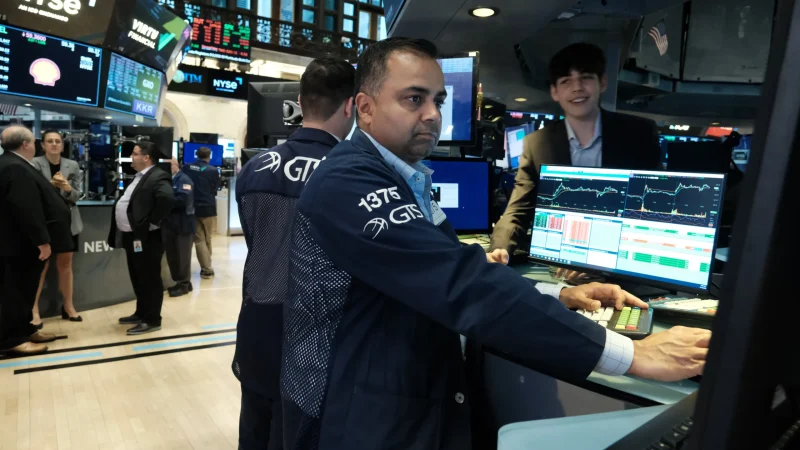
With the Treasury market closing at 2 p.m. Eastern time on Monday ahead of the Fourth of July holiday, fixed income trading activity may be thinner than usual. Major U.S. stock exchanges will also close early, at 1 p.m. Monday.
The Institute for Supply Management reported that the manufacturing index dropped to 46% in June, its lowest reading since May 2020, indicating contraction in the industrial sector of the economy. Economists had anticipated an index reading of 47.3% for June.
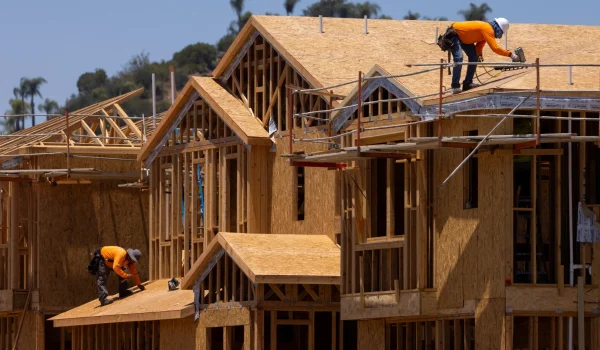
Meanwhile, the Commerce Department revealed a 0.9% increase in construction spending for May.
Looking ahead, market participants will focus on the release of the Federal Reserve’s meeting minutes from June and the nonfarm payrolls report for June, scheduled for Wednesday and Friday, respectively. The jobs report is expected to influence market sentiment and shape expectations regarding future monetary policy decisions by the Fed.
According to the CME FedWatch Tool, market pricing indicates an 86.2% probability of a 25 basis point interest rate hike by the Fed on July 26, bringing the rates to a range of 5.25%-5.5%. However, it is unlikely that the central bank will lower its fed-funds rate target to around 5% until next year.
Earlier on Monday, the 2-year yield briefly rose above 4.9%, leading to a temporary inversion of the yield curve as its spread with the 10-year rate reached minus 111.6 basis points, approaching a fresh cycle low.
Analysts from BMO Capital Markets, Ian Lyngen, and Ben Jeffery, noted that inversion continues to be a prevalent theme as the second half of the year begins. They anticipate the 2s/10s spread to set cycle lows, with the long end of the yield curve outperforming.
The analysts stated that the Federal Open Market Committee’s decision regarding further rate hikes will depend on incoming data. They added that unless there is a significant downturn in realized data or a notable tightening in financial conditions triggered by a drop in risk assets, the Fed is on track for another rate hike.